Whether you’re new to shooting sports or just curious about firearm accessories, the world of silencers and suppressors can be confusing.
These devices help reduce the noise of gunfire, protect your ears, and improve shooting comfort.
In this beginner-friendly guide, we’ll explain the basics: the different types of suppressors, how they compare to silencers, common misconceptions, and even how to keep them clean and well-maintained.
Types of Suppressors
Suppressors come in various shapes and sizes depending on the firearm they’re designed for.
Each type has its own use case and performance considerations:
Rifle Suppressors
- Built for high-pressure rounds fired by rifles, these are generally larger and handle more intense gases.
- They’re ideal for centerfire rifles on the range or in the field.
- SHOP ALL RIFLE SUPPRESSORS
Pistol Suppressors
- Smaller and lighter than rifle models, pistol suppressors are made for handgun calibers like 9mm, .45 ACP, and similar rounds.
- Some can work with subsonic rifle cartridges too.
- SHOP ALL PISTOL SUPPRESSORS
Rimfire Suppressors
- Typically the most affordable, rimfire suppressors are designed for low-power ammunition like .22 LR.
- They’re a great starting point for beginners interested in suppressed shooting.
- SHOP ALL RIMFIRE SUPPRESSORS
Shotgun Suppressors
- Less common but available, these are built for 12-gauge and similar shotguns.
- They reduce muzzle blast and make shooting more pleasant, especially for sport shooting or hunting.
- SHOP ALL SHOTGUN SUPPRESSORS
Shopping for a new Silencer or Suppressor?
Find the Suppressor/Silencer model you're looking for by entering the information fields below.
Can You Use a Suppressor with Multiple Firearms?
Yes, one suppressor can often be used on multiple firearms, as long as you follow the manufacturer’s guidelines and stay within the suppressor’s rated calibers and pressure limits.
In most cases, a multi-caliber suppressor is also a multi-gun suppressor. That flexibility is one of the biggest advantages of modern suppressor design.
How Multi-Firearm Compatibility Works
Suppressors are typically rated for:
- Specific calibers
- Maximum pressure levels
- Firearm types (pistol, rifle, or both)
As long as each firearm falls within those limits, the same suppressor can safely be used across multiple platforms with the proper mounting system or thread adapter.
For example, a pistol-rated suppressor designed for larger calibers can often be used on smaller calibers as well.
Likewise, a rifle suppressor rated for .30-caliber rounds can be used on smaller rifle calibers without issue.
This versatility allows shooters to:
- Reduce overall equipment costs
- Simplify maintenance
- Get more value from a single suppressor purchase
Real-World Examples of Multi-Gun
Use Many modern suppressors are designed with flexibility in mind. A single pistol suppressor may work on multiple handguns and even certain rifles when using subsonic ammunition.
Similarly, a .30-caliber rifle suppressor can often be mounted on various bolt-action and semi-automatic rifles chambered in different calibers.
While these are just examples, they illustrate the broader point: one suppressor can serve multiple roles when chosen correctly.
Monocore vs. Stacked Baffle Suppressors
When considering suppressor compatibility across multiple firearms, internal design also matters. Today’s suppressors generally fall into two main categories: stacked baffle suppressors and monocore suppressors.
Stacked Baffle Suppressors
Stacked baffle suppressors use a series of precisely machined baffles to slow, cool, and redirect expanding gases. Each baffle captures gas, reducing pressure and sound before it exits the suppressor.
Benefits of stacked baffle designs include:
- Excellent sound reduction
- Better performance with higher-pressure rifle cartridges
- Easier to tune for specific calibers
- Often easier to clean when user-serviceable
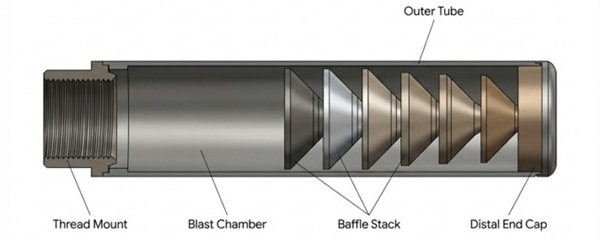
This design closely follows the original suppressor concept while benefiting from modern machining and materials.
Monocore Suppressors
Monocore suppressors use a single machined core rather than individual baffles. Gas is forced through a complex internal path that slows and cools it before exiting the suppressor.
Benefits of monocore designs include:
- Lower manufacturing cost
- Durable, one-piece construction
- Well-suited for lower-pressure rounds
However, monocore suppressors can struggle with higher-pressure rifle calibers unless they are made significantly longer and heavier.
They can also be more difficult to clean compared to stacked baffle designs.
Because of these traits, monocore suppressors are commonly found on:
- Rimfire suppressors
- Pistol suppressors
- Some centerfire rifle suppressors not intended for magnum pressures
Important note: Be cautious of questionable “fuel filter” monocore products sold online. These are illegal to own without proper federal approval and do not offer the safety or performance of a professionally manufactured suppressor.
Silencer vs Suppressor – What’s the Difference?
One of the most common questions is whether “silencers” and “suppressors” are different.
The short answer? Not really.
Terminology
- Silencer: The original term coined in the early 1900s; it’s still the legal designation used by regulators like the ATF.
- Suppressor: A term used more in the industry because it better describes what the device does - suppressing sound rather than eliminating it.
Both terms refer to the same type of device: something that reduces the sound of a gunshot by trapping and cooling expanding gases. What they don’t do, despite what Hollywood shows, is make a firearm completely silent.
Flash Suppressor vs Silencer
If suppressors are sometimes called silencers, does that mean a flash suppressor is also a silencer?
The short answer is no. While both devices interact with muzzle gases, they serve very different purposes.
What Is a Flash Suppressor (Flash Hider)?
A silencer (or suppressor) is designed to reduce the sound of a gunshot by slowing, cooling, and containing high-pressure gases as they exit the barrel.
A flash suppressor, often called a flash hider, is built to reduce or eliminate the visible flash that occurs when unburned powder ignites outside the muzzle, especially in low-light conditions.
While it’s true that silencers often reduce muzzle flash as a side effect of gas containment, flash suppressors:
- Do not reduce sound
- Do not trap or slow gas in the same way
- Are not regulated like silencers In other words, a flash suppressor improves visibility, not hearing safety.
Why Flash Suppressors Matter
Flash suppressors are designed primarily for the shooter’s benefit. By minimizing bright muzzle flash, they help:
- Preserve night vision
- Reduce visual distraction
- Improve follow-up shot awareness
These benefits are especially valuable for low-light hunting, home defense, and tactical shooting environments.
How Does a Flash Hider Work?
Flash suppressors come in several designs, but most work by controlling how burning gases exit the barrel.
Common approaches include:
- Dispersing gas so it cools before igniting
- Redirecting flame away from the shooter’s line of sight
- Allowing unburned powder to burn off gradually rather than all at once
Some flash suppressors use open-prong designs, while others resemble small cans or cones that contain and diffuse flame momentarily.
Flash Suppressors vs. Muzzle Brakes
Many shooters confuse flash suppressors with muzzle brakes, and for good reason, some devices combine both features.
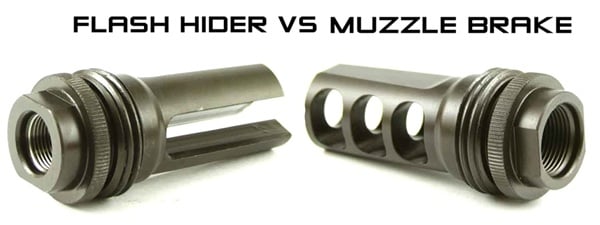
- Flash suppressor: Reduces visible muzzle flash
- Muzzle brake: Redirects gas to reduce recoil and muzzle rise
- Combination devices: Attempt to do both, with varying effectiveness
However:
- Not all flash suppressors reduce recoil
- Not all muzzle brakes reduce flash
- Some muzzle brakes actually increase visible flash
Understanding the difference helps shooters choose the right muzzle device for their specific needs.
Common Silencer Myths (Debunked)
Despite their growing popularity, silencers (also known as suppressors) are still surrounded by misinformation.
Movies, TV shows, and internet myths have created unrealistic expectations about what suppressors do and how they’re used. Let’s clear up some of the most common misconceptions.
Myth #1: Silencers Make Guns Hollywood-Quiet
Here’s a hard truth: Hollywood gets silencers wrong - EVERY SINGLE TIME!
A popular example is the mall scene in John Wick: Chapter 2, where characters exchange dozens of suppressed shots in a crowded public space without anyone noticing.
It’s entertaining, but it’s pure fiction.
In reality, suppressors significantly reduce noise, but they do not make firearms silent. Many suppressed firearms operate at sound levels considered hearing safe for short durations, but that doesn’t mean they’re quiet in the everyday sense.
For context:
- A chainsaw or jackhammer can fall into “hearing safe” decibel ranges for brief exposure
- Neither is anywhere close to silent
The same applies to suppressed firearms. Shooting a suppressed AR chambered in 5.56, especially with a short barrel, for extended periods will still warrant hearing protection.
That said, some setups come close to what people expect. A suppressed .22 LR rifle using subsonic ammunition is about as quiet as firearms get, but you’ll still hear it.
Myth #2: You Need a Class 3 License to Own a Silencer
This is one of the most common misunderstandings around suppressor ownership.
While you may hear the term “Class 3” thrown around, that license applies to the dealer, not the buyer.
Only certain federally licensed dealers are authorized to sell suppressors, but you do not need a special license to own one.
For most people, the rule is simple:
- If you can legally own a firearm
- And you live in a state where suppressors are legal
- You can legally own a suppressor after completing the required process
The purchasing process does involve extra steps, paperwork, and a wait time, but no special personal license is required.
Myth #3: Silencers Negatively Impact Bullet Velocity
Any device attached to the muzzle will affect firearm performance in some way, but that doesn’t mean the effect is bad. In fact, suppressors often have a slightly positive effect on velocity.
Because a suppressor effectively adds length to the barrel, expanding gases have more time to push the bullet before it exits the muzzle.
This doesn’t mean you’ll see dramatic gains; you shouldn’t expect a major performance boost. BUT, it does mean:
- Velocity loss is not a concern
- Any change is typically neutral or mildly positive
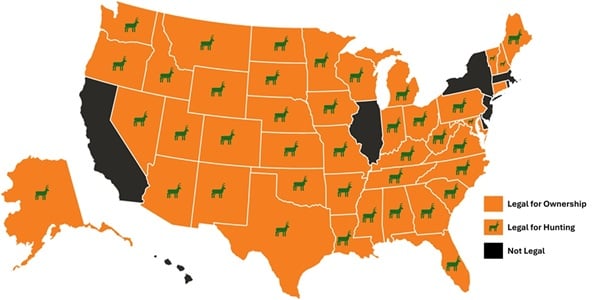
Myth #4: Silencers Are Illegal
Suppressors are not illegal under federal law. They are regulated under the National Firearms Act of 1934, which is where much of the confusion comes from.
As of now:
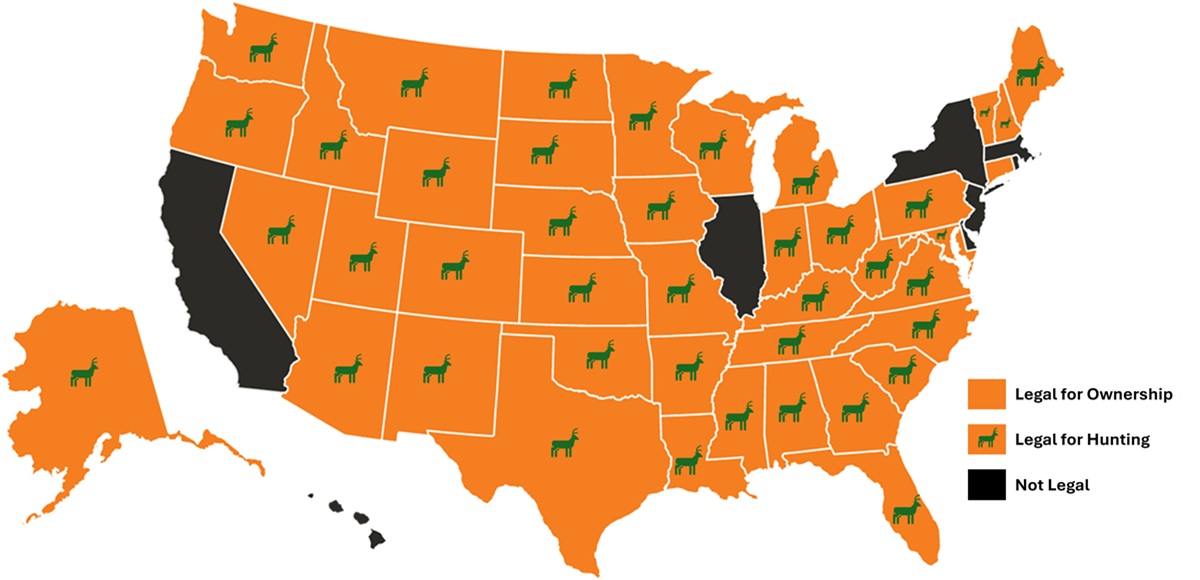
- Suppressors are legal to own in 42 states
They are prohibited in:
- California
- Delaware
- Hawaii
- Illinois
- Massachusetts
- New York
- New Jersey
- Rhode Island
- They are also illegal in Washington, DC
If you live in a legal state and follow all federal, state, and local laws, owning a suppressor is completely lawful.
Myth #5: Hunting with Silencers Is Illegal
This myth used to have more truth behind it, but times have changed. Today:
- Suppressor ownership is legal in 42 states
- Suppressor use while hunting is legal in 41 of those states
The only exception is Connecticut, where suppressors are legal to own but not legal to use for hunting.
Since 2011, 18 states have legalized suppressor hunting, reflecting a growing understanding that suppressors:
- Protect hunters’ hearing
- Reduce noise pollution
- Do not provide an unfair advantage
Myth #6: Silencers Are Only Useful for Tactical Situations
Movies and social media love to portray suppressors as gear reserved for military or “operator” use, but that’s far from reality.
While suppressors do offer tactical advantages, their real-world benefits extend far beyond that label.
Suppressors are commonly used for:
- Introducing new shooters with less noise and recoil
- Preserving hearing while hunting
- Reducing noise complaints at outdoor ranges
- Minimizing muzzle flash in low-light conditions
- Reducing recoil and shooter fatigue
- Improving accuracy through better shot placement
Most suppressor owners will never use them in anything remotely “tactical”, and that’s perfectly normal.
Myth #7: Silencers Have a Short Lifespan
Early silencers from the early 1900s often used disposable or degradable materials, which gave rise to this myth. That is no longer the case.
Modern suppressors are built using:
- High-strength steel
- Titanium
- Advanced baffle designs
With proper care and cleaning, modern suppressors are designed to last tens or even hundreds of thousands of rounds. In many cases, it’s reasonable to expect a suppressor to outlast its owner.
How to Clean a Suppressor
Proper maintenance keeps your suppressor functioning reliably and extends its life. Cleaning frequency and methods depend on how often you shoot and the type of suppressor you own.
Why Clean?
Every shot deposits carbon, lead, and other residues inside your suppressor. Over time, this buildup can reduce performance and lead to wear.
Cleaning Steps (Basic Guide)
- Safety First: Ensure the firearm and suppressor are cool and unloaded before beginning.
- Disassemble: If your suppressor is user-serviceable, take apart the baffles and tube as instructed by the manufacturer.
- Brush & Solvent: Use a soft brush and a suppressor-safe solvent to remove carbon buildup from baffles and internal surfaces.
- Soak and Rinse: Parts can be soaked in cleaning solvent to loosen stubborn fouling.
- Dry and Reassemble: Ensure all parts are dry and lightly lubricated if needed before reassembling.
- Sealed Units: Some suppressors cannot be disassembled, these usually require only external cleaning or periodic professional service.
Summary
Suppressors (often called silencers), are valuable tools for reducing noise, protecting shooter hearing, and improving overall shooting comfort.
Understanding the types available, the terms used, and how to maintain your suppressor helps you make informed decisions and get the most out of your gear.
Whether you’re gearing up for your first suppressed range day or refining your maintenance routine, knowing the basics of silencers and suppressors will set you up for safer and more enjoyable shooting experiences.
ADDITIONAL RESOURCES
Want to dive deeper into suppressors and silencers?
Explore the Ammunition Depot Silencer Solutions page for clear, up-to-date guidance on suppressor laws, ATF forms, ownership requirements, and essential components.
Whether you’re researching your first silencer or expanding your setup, Silencer Solutions offers a trusted hub for everything related to firearm suppressors.
